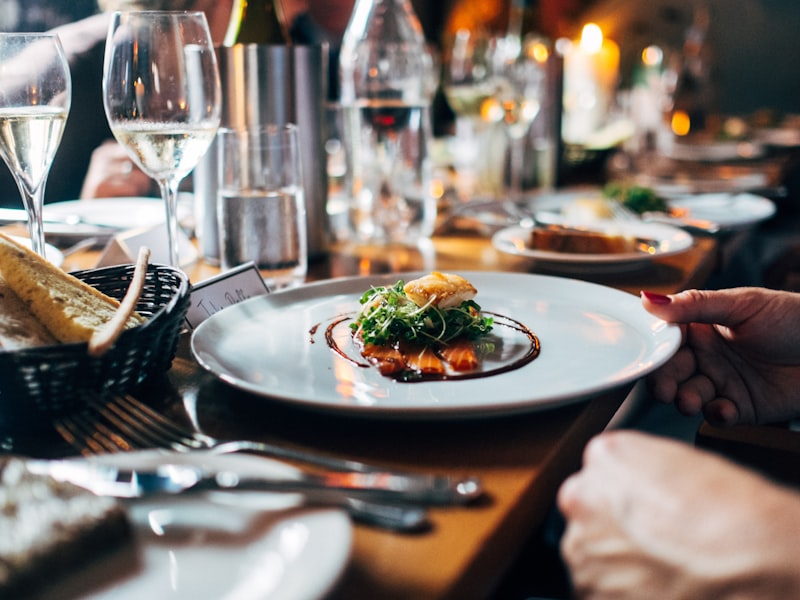
Walk into any Michelin-starred restaurant and youll notice something before you even taste the food. The plates look like art installations. Each component sits exactly where it should, colors pop against white porcelain, and negative space draws your eye to what matters most.
This isnt accident. Its the result of precise techniques that chefs spend years mastering.
The rule of thirds changes everything
Professional plating starts with a concept borrowed from photography: the rule of thirds. Imagine dividing your plate into a three-by-three grid. The magic happens when you place your main elements along these lines or at their intersections.
Chefs at restaurants like The French Laundry and Eleven Madison Park use this principle religiously. It creates visual interest without overwhelming the diner. Your eye naturally follows the composition, just like it would in a well-framed photograph.
But theres more to it than geometry. The best chefs understand that negative space matters as much as the food itself. Empty areas on a plate arent wasted real estate. Theyre strategic choices that highlight the star ingredients.
Height and texture create drama
Flat food looks boring, even if it tastes incredible. Thats why Michelin kitchens obsess over adding dimension to their plates.
One common technique: twirling pasta so it mounds upward, or stacking components vertically. A piece of perfectly cooked fish might rest on a bed of wilted greens, elevated just enough to catch the light. Root vegetable purees get swooshed across the plate with the back of a spoon, creating natural hills and valleys.
Texture plays an equally important role. The contrast between creamy and crunchy, smooth and rough, hot and cold adds complexity that goes beyond taste. Modern techniques like foams, gels, and delicate microgreens provide visual interest while delivering different mouthfeels.
According to industry research, chefs now use these textural elements strategically. A foam might add lightness to a rich dish, while crispy elements provide necessary contrast.
Color theory isnt just for painters
Chefs pay intense attention to the hues and tones of every component on the plate. Vibrant vegetables, bright sauces, and colorful garnishes get arranged to create eye-catching contrasts.
But it has to look natural. The current trend in 2024 and 2025 leans toward what experts call edible landscapes. Plates resemble miniature gardens, with microgreens, edible flowers, and herbs arranged like living ecosystems. This rustic-meets-refined approach emphasizes seasonality while maintaining the precision that defines Michelin cooking.
The key is that every ingredient serves a purpose. Those flowers arent just decoration. They add flavor, aroma, or a specific texture that completes the dish. Style never gets in the way of substance.
Geometry brings order to chaos
If youve seen those perfectly circular quenelles of sorbet or meticulously arranged rows of vegetables, youre witnessing geometric plating in action. Chefs use precise cuts and shapes to create visually striking compositions.
Circles, straight lines, triangles—these basic shapes provide structure. But the real skill comes from knowing when to break the rules. A scattering of fresh herbs across a geometrically perfect plate can make the difference between sterile and stunning.
Professional kitchens use specialized tools to achieve this precision. Ring molds create perfect cylinders of tartare or vegetables. Offset spatulas spread sauces with architectural precision. Even tweezers become essential for placing delicate garnishes exactly where they belong.
The philosophy behind the presentation
Despite all these techniques, the best Michelin chefs insist on one principle: presentation should enhance the dining experience, not overshadow it. The visual impact draws you in, but the flavors keep you engaged.
This balance separates truly great plating from dishes that look impressive but lack substance. As the culinary world moves into 2025, the emphasis remains on letting ingredients shine while using precise techniques to frame them beautifully.
The plates you see at three-star restaurants represent hours of practice, deep understanding of visual principles, and an obsessive attention to detail. But at its core, Michelin plating is about respect—for the ingredients, for the craft, and for the diner who sits down expecting something extraordinary.